
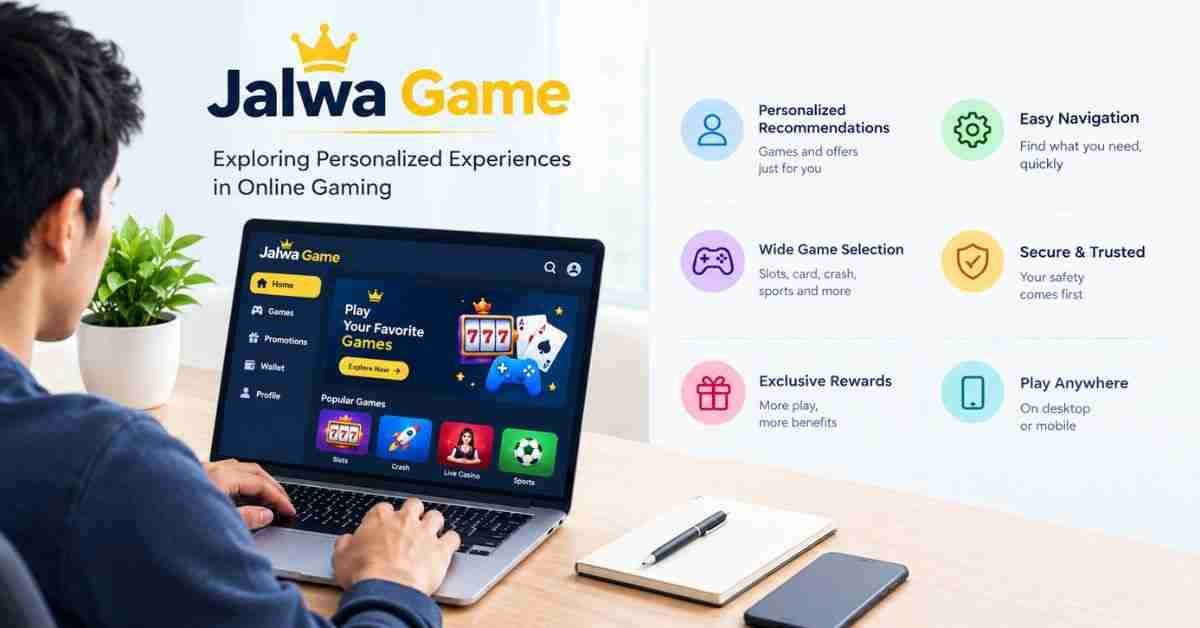
Personalization has become an important part of modern digital experiences. People use different languages, prefer different layouts, and approach online entertainment with individual expectations. As a result, a single design does not always provide the same level of convenience for every user. Personalized experiences aim to accommodate these differences while allowing people to maintain control over their digital activities. Jalwa Game offers a context for exploring how personalization could shape online gaming experiences.
Understanding Personalization Beyond Recommendations
Personalization is often associated with automated recommendations, but its potential is much broader. A digital service can accommodate individual preferences through language settings, display options, notification controls, and adjustable levels of guidance.
For example, a new user may appreciate brief explanations of unfamiliar terms, while an experienced user may prefer direct access to familiar sections. Allowing both users to choose their preferred level of guidance can make an interface more flexible.
In a Jalwa Game-related design concept, personalization could begin with simple, user-controlled settings rather than complicated automated systems. This approach gives people practical choices without requiring extensive personal data collection.
The objective is to improve convenience, not to predict every action a person might take. A personalized experience should remain understandable even when users choose not to customize anything.
Designing for Different User Preferences
People interact with digital entertainment under different circumstances. Someone using a small mobile screen may prioritize compact navigation, while another person may prefer larger text and clearly separated controls. Language preferences and accessibility needs can also influence the overall experience.
A flexible interface could offer several practical adjustments:
- Display preferences: Options for text size, contrast, and visual appearance.
- Language selection: Clear access to supported language choices.
- Navigation preferences: Simple ways to locate frequently used sections.
- Notification controls: Options to reduce unnecessary interruptions.
- Guidance settings: Brief instructions for beginners and direct navigation for experienced users.
For Jalwa Game, these ideas represent possible approaches to personalization, not claims about features currently available on the platform.
Contextual Guidance That Arrives at the Right Time
Information is more useful when it appears at the moment a person needs it. Long instruction pages can overwhelm users, particularly when they are trying to complete a simple task.
Contextual guidance offers another approach. A short explanation could appear beside an unfamiliar control, while a more detailed help section remains available for people who want additional information.
A Jalwa Game-inspired interface could use optional introductory tips, clear explanations of unfamiliar terminology, and brief reminders about important account settings. Users should be able to dismiss unnecessary guidance and return to it later.
This method respects different experience levels without assuming that every user needs the same explanation.
Contextual guidance should also remain neutral and informative. It should not use personalization to create pressure, exaggerate possible rewards, or push users toward decisions they did not intend to make.
Responsible Use of Data in Personalized Experiences
Some personalization systems rely on information about user behavior. Although this information can help identify preferences, collecting it also creates responsibilities.
A responsible approach begins by asking whether particular information is genuinely necessary. If a user can choose a language directly, for instance, a system may not need to infer that preference from extensive behavioral tracking.
For any Jalwa Game-related service, users should be able to review the available privacy information and understand how their information is handled. Developers should communicate the purpose of data collection, limit unnecessary access, and provide appropriate controls where possible.
Personalization should not become a reason to monitor every interaction or retain information indefinitely. Protecting privacy is part of creating a positive user experience.
Transparency also matters when automated recommendations are used. People should not be misled into believing that a recommendation guarantees a particular result or reflects an objective assessment when it does not.
Measuring Whether Personalization Improves the Experience
A personalized interface is not automatically a better interface. Additional settings and recommendations can create confusion if they do not address genuine user needs.
Developers can evaluate personalization through practical usability tests. Participants might be asked to change a display setting, locate important information, adjust notifications, or complete a common navigation task.
Useful measurements include task completion, user-reported clarity, accessibility, error frequency, and the ease of reversing a change. Feedback from different groups can reveal whether a feature works well for beginners and experienced users alike.
Testing should also consider people using older devices, slower connections, or assistive technologies. A personalized feature that performs poorly under these conditions may exclude the users it was intended to help.
Balancing Personal Relevance with Healthy Boundaries
Personalization can make digital entertainment more relevant, but it should not exploit individual habits. Repeated alerts, pressure-based recommendations, and designs that encourage constant checking may undermine a healthy relationship with technology.
A better approach gives users control over reminders, offers clear ways to pause participation, and avoids treating longer sessions as the only measure of success.
Where gaming involves lotteries or other chance-based activities, personalization must never imply that previous behavior can guarantee future winnings. Outcomes remain uncertain, and such activities should not be treated as dependable income. Users should follow applicable laws and age restrictions, set firm spending limits, and never use borrowed money or funds needed for essential expenses.
Conclusion
Jalwa Game provides a useful starting point for examining how personalized experiences could make online gaming more flexible and accessible. Language choices, adjustable interfaces, contextual guidance, privacy-conscious data practices, and meaningful usability testing all offer practical areas for exploration.
The strongest personalization does not attempt to control the user. Instead, it gives individuals useful choices while keeping the experience simple, transparent, and respectful.
By focusing on genuine needs rather than collecting excessive data or encouraging continuous engagement, online gaming services can pursue a more relevant experience that supports user independence, accessibility, and responsible participation.