
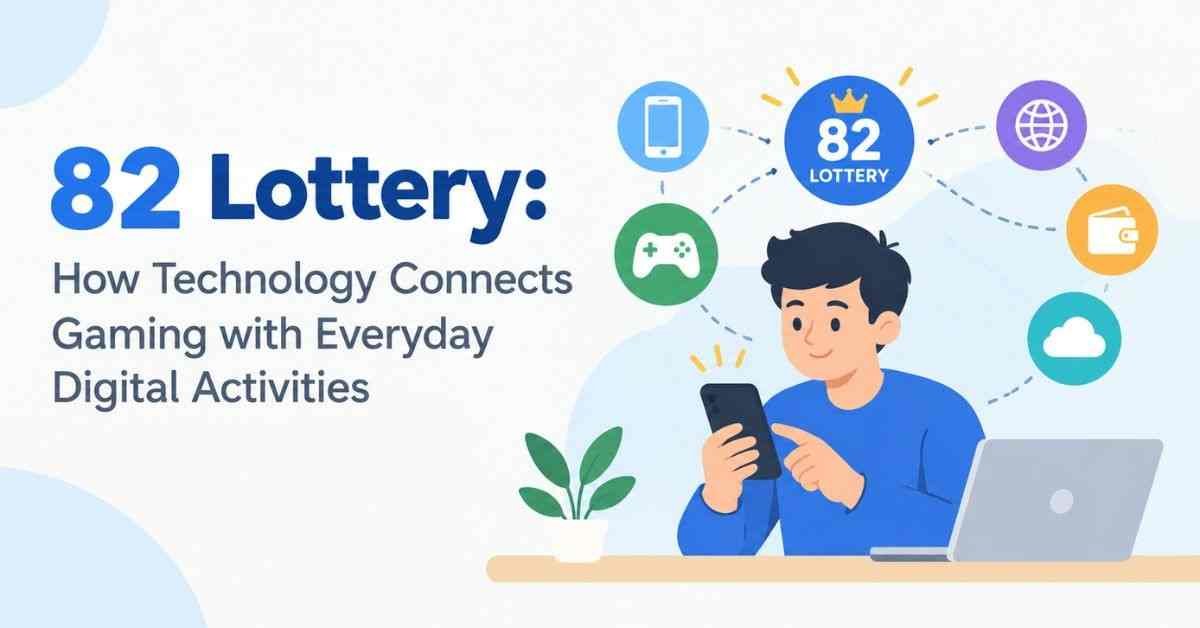
Technology has gradually brought entertainment closer to the activities people already perform online. Checking messages, reading news, making digital payments, watching videos, and exploring interactive applications can now happen through the same smartphone. This convergence has changed how people discover leisure 82 Lottery activities and move between different digital environments. Within this broader landscape, this provides a starting point for examining how technology connects gaming with everyday digital activities.
Smartphones as a Common Digital Gateway
Smartphones have become central to everyday digital participation. A single device can support communication, education, entertainment, shopping, navigation, and financial services. This shared access point allows users to discover different activities without switching between multiple devices.
Gaming services can become part of this environment when their interfaces work effectively on mobile screens. Readable text, clearly organized menus, and straightforward instructions help users navigate digital entertainment alongside other applications.
For an experience associated with 82 Lottery, mobile compatibility can be considered an important design objective. Developers should evaluate whether pages remain usable on different screen sizes, whether essential information loads correctly, and whether navigation works under varying internet conditions.
However, having entertainment available throughout the day does not mean people need to use it continuously. The value of mobile technology lies in giving users choices, not turning every spare moment into screen time.
The Role of Digital Identity Across Services
Many everyday online activities require users to establish or verify an identity. Email accounts, shopping platforms, financial applications, and entertainment services may each have their own registration and security procedures.
Although these systems can make digital participation more organized, users should not assume that an account on one service automatically verifies an account on another. Different platforms operate under different rules and may collect different categories of information.
When examining 82 lottery or similar gaming services, users should understand the registration requirements and review the relevant privacy information before sharing personal details.
Good digital identity practices include creating unique passwords, protecting verification codes, checking website addresses carefully, and using additional authentication where available. These precautions are useful across the wider digital ecosystem, not just in gaming.
The goal is to make online participation more secure without unnecessarily exposing personal information.
Moving Between Content and Interactive Experiences
Everyday digital activity often involves moving from one type of content to another. Someone might read an online article, open a shared link, watch a short video, and then explore an interactive service.
This movement illustrates how discovery and entertainment have become connected. Search engines, recommendations, messaging applications, and online communities can introduce users to services they have never encountered before.
For 82 Lottery, this relationship can be explored through the broader concept of digital discovery. Clear descriptions, accurate information, and transparent navigation can help people understand what a service offers before deciding whether to participate.
At the same time, users should evaluate links and promotional claims carefully. Messages that promise guaranteed rewards, demand urgent action, or request sensitive information deserve particular caution.
Responsible discovery means making decisions based on understandable information rather than pressure, exaggerated promises, or misleading online recommendations.
Digital Payments and Financial Awareness
Digital payments have made many online transactions more convenient. Depending on the service and the country, people may use supported payment applications, bank transfers, cards, or other authorized methods for different types of online purchases.
When an entertainment service involves financial transactions, convenience should be accompanied by transparency. Users need to understand applicable fees, transaction conditions, refund policies, and the identity of the recipient before authorizing a payment.
In the context of the 82 Lottery, these are general evaluation criteria rather than claims about its available payment methods. Users should confirm payment instructions through legitimate channels and avoid sharing passwords, PINs, or one-time verification codes.
It is also important to separate entertainment spending from essential household expenses. Lottery-style activities involve uncertain outcomes, and no method can guarantee winnings. They should never be treated as a reliable source of income or funded with borrowed money.
Notifications, Scheduling, and Everyday Routines
Notifications connect digital services with daily schedules by reminding users about updates, messages, or other activity. Used thoughtfully, they can provide useful information without requiring constant manual checking.
However, excessive alerts can interrupt concentration and encourage repeated visits to applications. This may affect studying, working, resting, or spending time with family.
A better digital experience gives users meaningful control over notifications and communication preferences. Individuals can disable unnecessary alerts, establish specific periods for entertainment, and keep their devices away during important tasks.
For gaming services, the wider lesson is that convenient technology should respect a person’s time. Digital entertainment can fit into a routine without becoming the organizing force behind it.
Interoperability, Trust, and Future Opportunities
As digital services become more connected, interoperability—the ability of different systems to exchange information or work together—becomes increasingly relevant. Standardized interfaces, secure authentication methods, and accessible technical support can help digital environments function more consistently.
Nevertheless, connectivity must be managed carefully. Sharing information across systems can create privacy and security risks if permissions are unclear or safeguards are inadequate.
Future improvements in gaming technology could focus on better accessibility, clearer account controls, faster error reporting, and more understandable user guidance. These developments would support practical usability rather than adding features simply for novelty.
For 82 Lottery and comparable services, trust should depend on verifiable information, transparent policies, and responsible handling of user data—not unsupported claims about technology or performance.
Conclusion
Technology connects gaming with everyday digital activities through mobile access, online discovery, digital identity, payment systems, notifications, and shared security practices. The example of 82 Lottery provides a way to examine these wider relationships without reducing the discussion to gameplay alone.
Ultimately, technology should help people manage their digital lives more effectively. Gaming can remain one part of that experience when participation is informed, lawful, and kept within healthy personal boundaries.