
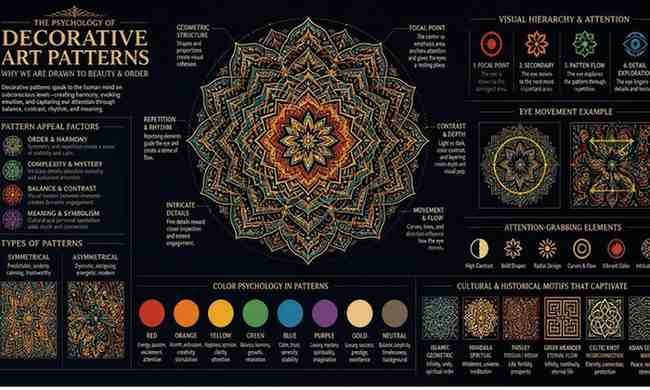
Intricate patterns hold attention because the brain enjoys order, rhythm, and discovery. A repeated curve feels familiar. A small variation creates surprise. Together, these qualities make decorative art easy to enter and hard to ignore.
Decorative patterns guide the eye across a surface. Lines lead into shapes. Shapes repeat, overlap, and change scale. The viewer follows this structure much like a reader follows a sentence.
Symmetry also creates a sense of balance. The brain can process organized forms quickly, which makes them feel calm and satisfying. Yet perfect repetition can become dull, so skilled artists introduce small differences that keep attention active.
This balance between order and variation explains why detailed forms such as mehndi, mosaics, textiles, and carved ornament remain visually powerful. The pattern feels stable, but it still offers something new to notice.
Intricate art captures attention not because it is crowded, but because each detail supports a clear visual system.
Small Details Keep The Eye Moving
Repetition Creates Comfort
The brain quickly recognizes repeated forms.
A series of leaves, circles, or flowing lines creates a visual rhythm that feels predictable. This rhythm reduces mental effort because the viewer begins to understand the structure after only a few moments.
Recognition creates a sense of visual stability.
Variation Prevents Monotony
A successful pattern does not repeat every element in exactly the same way.
Artists adjust the size of a shape, change the spacing between lines, or introduce a new motif at the right moment. These subtle differences encourage the eye to continue exploring instead of stopping after the first impression.
Readers interested in another example of a digital experience built around evolving interactions and carefully structured progression can explore jetx casino game to see how thoughtful design maintains engagement in a different context.
Balance Gives Decorative Art Lasting Appeal
Intricate designs appear complex because they contain many details.
They remain enjoyable because those details follow an organized structure. Every line supports the overall composition rather than competing for attention. The viewer can appreciate individual elements while still understanding the complete design.
This explains why decorative traditions remain compelling across cultures and generations. Careful balance between repetition and variation allows intricate patterns to hold attention naturally, rewarding closer observation without overwhelming the viewer.
Cultural Meaning Gives Decorative Patterns Greater Depth
Symbols Carry Stories Across Generations
Decorative art often communicates more than beauty.
Many patterns represent ideas that have been shared for centuries. Flowers may symbolize growth, flowing vines may suggest continuity, and geometric forms may express harmony and balance. Even when viewers do not know every symbol, they often recognize that the design carries intention beyond its appearance.
This gives decorative art emotional as well as visual value.
Handmade Designs Reflect Human Creativity
Small variations reveal the presence of the artist.
A slightly different curve, an unexpected flourish, or a carefully placed detail reminds the viewer that the pattern was created by human hands rather than copied mechanically. These subtle differences make each design unique while preserving the overall structure.
Craftsmanship becomes visible through careful attention to detail.
Tradition And Innovation Can Exist Together
Decorative art continues evolving without losing its identity.
Artists preserve traditional structures while introducing new compositions, modern influences, and personal interpretations. This balance allows familiar styles to remain recognizable while giving each generation opportunities to expand the tradition in thoughtful ways.
The enduring appeal of intricate patterns comes from this combination of stability and creativity. Familiar forms provide comfort, while new details encourage exploration. Together, they create decorative art that remains visually engaging, culturally meaningful, and rewarding to study over time.
Intricate Patterns Continue To Fascinate Because They Reward Attention
Decorative art has remained meaningful across cultures because it combines visual harmony with thoughtful design. Repeated forms create order, while carefully placed variations introduce movement and discovery. This balance encourages the eye to continue exploring instead of losing interest after the first glance.
The psychology behind this response is remarkably consistent. People naturally recognize patterns, seek structure, and enjoy finding relationships between individual elements. Intricate designs satisfy these tendencies by offering both familiarity and novelty within the same composition. Every closer look reveals another connection, another detail, or another layer of craftsmanship.
Cultural traditions strengthen this experience even further. Decorative patterns often preserve symbols, stories, and artistic techniques that have been passed from one generation to the next. As artists adapt these traditions with new ideas and personal interpretations, the designs remain both recognizable and original. This continuity allows decorative art to evolve without losing its identity.
The enduring appeal of handcrafted ornament also reflects the value of human creativity. Slight variations in line, spacing, and composition remind viewers that every piece results from deliberate choices rather than mechanical repetition. These subtle differences give each work its own character while maintaining visual balance.
In the end, the psychology of decorative art demonstrates that lasting visual impact depends on thoughtful organization rather than complexity alone. Intricate patterns capture attention because they unite rhythm, balance, variation, and cultural meaning within a coherent design. By rewarding careful observation and inviting repeated discovery, they continue to inspire appreciation across generations and artistic traditions.