
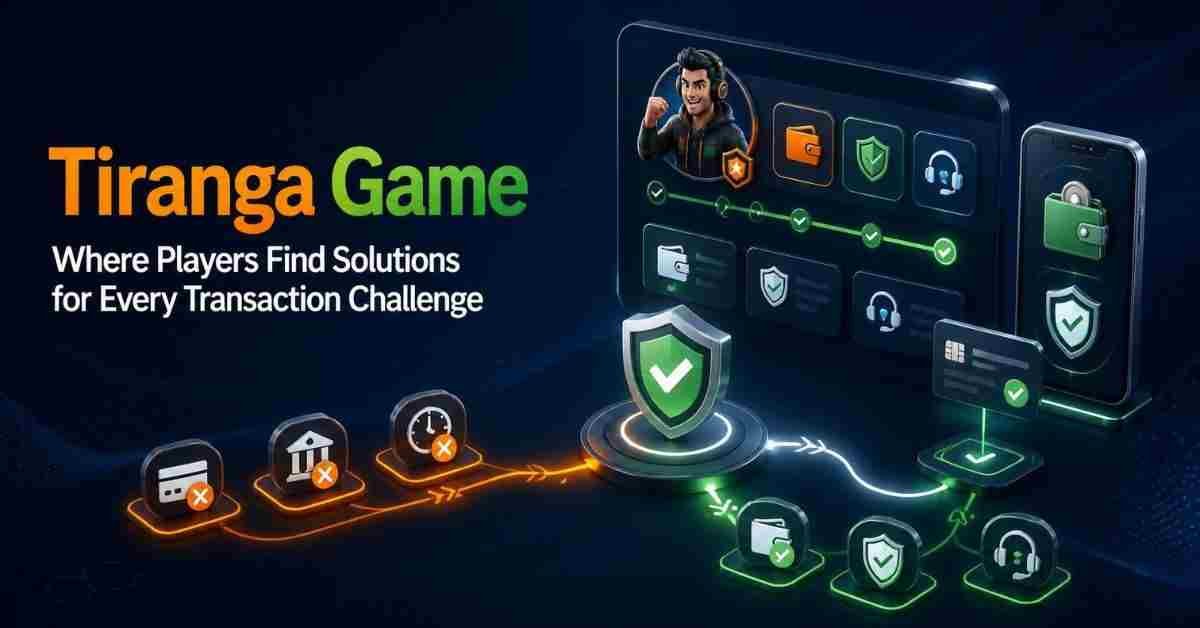
Digital gaming platforms increasingly depend on online transaction systems for deposits, withdrawals, account balances, and other financial activities. When a transaction does not appear as expected, users may become confused about whether the problem is related to the gaming platform, payment provider, bank, or internet connection. Tiranga Game can be explored in this context as an example of how users can approach transaction challenges systematically and use digital tools to find practical solutions.
Understanding Transaction Challenges
Transaction problems can occur for several reasons. A payment may remain pending, an account balance may not update immediately, or a withdrawal request may require additional verification. Tiranga Game the first step is to identify exactly what happened. Users should check the transaction amount, date, payment method, reference number, and current status rather than immediately attempting another transaction.
This basic review can help distinguish between a processing delay and an actual transaction failure.
Check the Transaction History
A well-organized account dashboard should provide access to transaction records. Reviewing this history can help users determine whether a transaction was completed, pending, rejected, or cancelled.
If the transaction history shows a completed payment but the balance appears incorrect, users can retain the relevant details and contact official support.
Keeping accurate records is particularly useful when several transactions have been made within a short period.
Verify Payment Information
Incorrect payment details can cause unnecessary complications. Before initiating a transaction, users should carefully check the selected payment method and the information associated with it.
Users should also confirm that the payment account belongs to them and satisfies the platform’s requirements. If verification is necessary, it should be completed through the platform’s official process.
Managing Pending Transactions
A pending transaction does not necessarily mean that the payment has failed. Processing can sometimes take longer because of payment-provider procedures, account verification, network conditions, or temporary technical maintenance.
Users should avoid repeatedly submitting the same request while the original transaction is still being processed. Instead, they should monitor its status and wait for the appropriate processing period specified by the relevant service.
Handling Failed Transactions
When a transaction is marked as failed, users should first identify the reason provided by the platform or payment provider. Common possibilities can include insufficient balance, incorrect information, verification problems, technical interruptions, or payment-provider restrictions.
If the reason is unclear, users can contact official support and provide the transaction reference and other non-sensitive information.
Keeping Transaction Evidence
Digital records can make problem resolution much easier. Users should keep confirmation messages, transaction IDs, timestamps, and screenshots when appropriate.
These records provide useful evidence when communicating with customer support. However, screenshots should be checked carefully before sharing to ensure they do not expose passwords, PINs, verification codes, or other private information.
Using Official Support
When a transaction problem cannot be solved through basic account tools, official customer support should be the next option.
A clear support request can include the transaction reference, approximate transaction time, amount, payment method, and displayed status. Providing complete but non-sensitive information can help support teams investigate the issue more efficiently.
Users should be cautious about unofficial individuals who offer to “fix” transaction problems through social media or messaging services.
Protecting Financial Information
Transaction management also requires strong security habits. Users should never provide account passwords, one-time verification codes, PINs, or private banking information to unknown people.
Before entering payment information, users should verify that they are using the correct website or official application. Suspicious links and unexpected messages should be avoided.
Strong, unique passwords and additional authentication methods can provide further protection.
Preventing Future Problems
The best transaction solution is often prevention. Users can reduce avoidable problems by checking payment details before submitting a request, maintaining accurate account information, keeping transaction records, and using reliable internet connections.
Keeping devices and supported applications updated can also reduce compatibility problems.
Responsible Transaction Management
If gaming involves real-money participation, users should also manage spending carefully. A transaction system may make deposits and withdrawals convenient, but convenience should not encourage excessive spending.
Users can establish personal financial limits before participating and should never increase their spending simply to recover previous losses.
Technology as a Problem-Solving Tool
Modern platforms can use smart technology to improve transaction management. Automated status notifications, real-time account histories, verification systems, secure payment integrations, and clearer error messages can help users understand what is happening.
For Tiranga Game and similar platforms, these tools can make financial activity easier to monitor while reducing unnecessary confusion.
Conclusion
Tiranga Game can be viewed within the wider digital gaming environment where transaction management is an important part of the user experience. Checking transaction history, verifying payment details, understanding status messages, maintaining records, and using official support channels can help users address common transaction challenges more systematically.
Technology can make transactions more convenient, but users also need to maintain strong security and responsible spending habits. By combining careful record-keeping, verified payment information, secure account practices, and realistic expectations, players can manage digital transaction challenges with greater confidence.